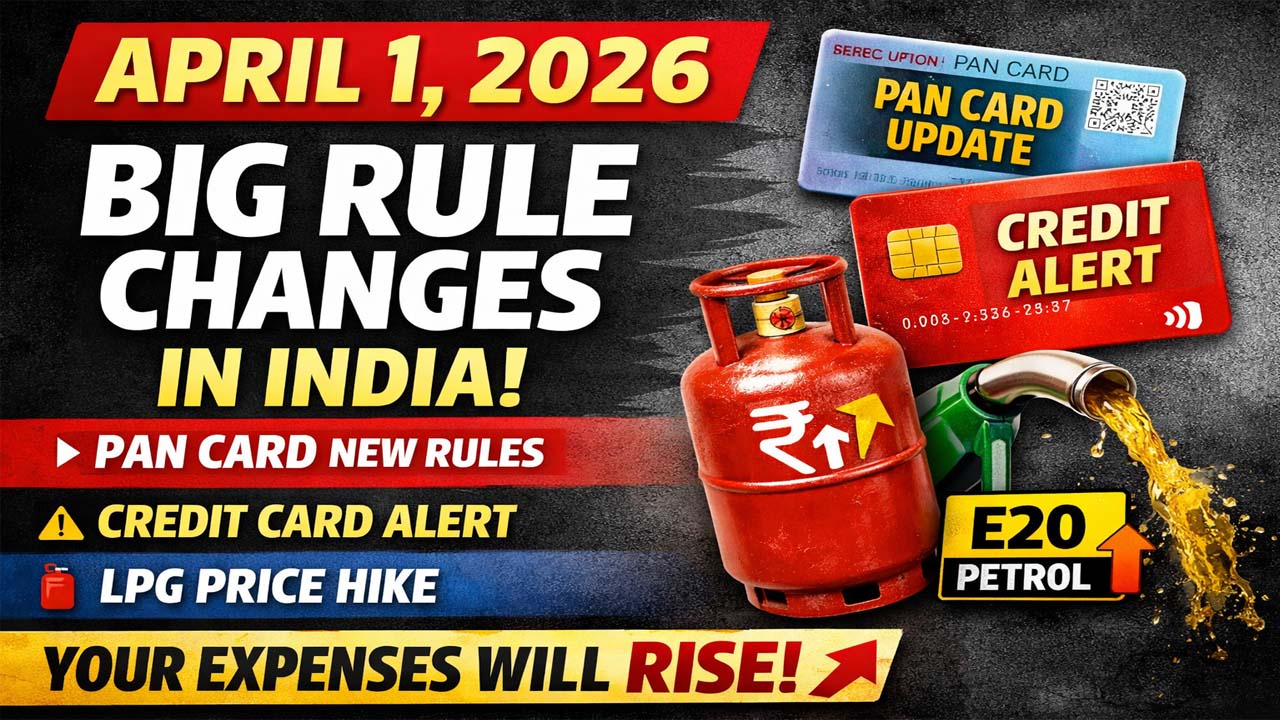
Big Changes From April 1, 2026: From April 1, 2026, the new financial year 2026–27 begins, bringing several important changes to India’s financial system. These updates are not just technical—they can directly affect your salary, savings, taxes, and daily spending habits. Whether you are a salaried employee, a taxpayer, or someone who regularly uses digital payments, understanding these changes is essential. Being aware now can help you avoid unnecessary charges, penalties, or confusion later.
What’s Changing from April 1, 2026
With the start of the new financial year, multiple financial rules are expected to change. These updates are aimed at improving transparency and strengthening security, but they also require individuals to be more careful with their finances.
Stricter PAN Card Rules
PAN card regulations are likely to become stricter. Linking with Aadhaar alone may not be sufficient in certain cases, and additional documents could be required for new applications or corrections. This move is intended to reduce fraud and improve tax compliance.
Enhanced Digital Payment Security
Digital payment platforms such as UPI and mobile wallets may introduce two-layer authentication systems. This means transactions could require both OTP verification and PIN or biometric confirmation. While this adds an extra step, it will significantly improve security and reduce fraud risks.
Tighter HRA Claim Rules
If you claim House Rent Allowance (HRA) and your annual rent exceeds ₹1 lakh, providing the landlord’s PAN will become mandatory. Authorities may also verify that the landlord is not a close family member, ensuring that claims are genuine.

Changes in ATM, Credit Cards, and Taxes
Updated ATM Withdrawal Rules
Cash withdrawals through UPI may now be counted within the free transaction limit. Once the limit is exceeded, additional withdrawals could attract charges of around ₹23 per transaction. This means users need to monitor their withdrawals more carefully.
Credit Card Transactions Under Scrutiny
High-value credit card transactions will be closely monitored. If your annual spending crosses a certain threshold, it may be reported to the Income Tax Department. This is aimed at tracking undisclosed income and ensuring financial transparency.
Possible Implementation of New Income Tax Act
The proposed Income Tax Act 2025 may come into effect in the financial year 2026–27. This could simplify tax filing but also requires taxpayers to understand the updated structure to avoid mistakes.
Updates on Fuel and LPG Prices
Introduction of E20 Petrol
Petrol may now include 20% ethanol blending (E20). This step is aimed at making fuel more environmentally friendly. However, it may have some impact on older vehicles that are not designed for such fuel composition.

LPG Price Revisions
As seen in previous years, LPG cylinder prices may be revised at the start of the financial year. This can directly affect household budgets, especially for middle-class families.
Who Will Be Most Affected
These changes are likely to impact almost every household in India. However, certain groups need to be particularly cautious.
Salaried employees, taxpayers, credit card users, digital payment users, tenants claiming HRA, and vehicle owners will all feel the impact. For example, if you pay rent and claim HRA, you must now maintain proper documentation to avoid issues.
What You Should Do Now
Before these rules come into effect, taking a few proactive steps can help you stay prepared.

Ensure your PAN and Aadhaar details are updated and accurate. Keep your bank account and mobile number updated for smooth digital transactions. If you frequently use credit cards, start maintaining a clear record of your expenses.
It is also advisable to begin tax planning early instead of waiting until the end of the financial year. Early planning can help you optimize savings and avoid last-minute stress.
Long-Term Benefits of These Changes
Although these updates may seem strict initially, they offer several long-term advantages.
Digital transactions will become safer, reducing fraud risks. The tax system will become more transparent, helping honest taxpayers. Additionally, better financial tracking can lead to improved savings habits and disciplined spending.

How to Plan Ahead Smartly
Adapting early to these changes can save you from future complications.
Maintain proper records of all transactions, avoid large cash dealings, and rely on secure digital payment methods. Choosing the right tax regime and filing returns on time will also be crucial.
Those who stay informed and adjust early are less likely to face financial issues later.
FAQ Section
Will all these rules be लागू from April 1, 2026?
Most financial changes generally take effect from the start of the new financial year, but some rules may be implemented gradually based on official notifications.

Do I need to update my PAN card immediately?
If your details are outdated or incorrect, updating your PAN card is recommended to avoid complications in the future.
Will digital payments become difficult?
No, they will remain convenient. The only change is the addition of extra security steps to make transactions safer.
Is high credit card usage risky now?
High spending without proper tracking may attract scrutiny. It is important to maintain records and spend responsibly.
Will taxes increase due to these changes?
Not necessarily. However, stricter rules mean that incorrect or incomplete information could lead to penalties.
Conclusion
The financial changes coming into effect from April 1, 2026, mark a significant shift towards a more transparent and secure system. While these updates may require some adjustment initially, staying informed and prepared can help you manage your finances smoothly. Understanding these rules today will ensure that you avoid unnecessary problems and make better financial decisions in the future.